
Our Community
Dedicated to Arts Education and Innovation
Articles and acknowledgments that celebrate cutting-edge research, crafted by the most brilliant minds from the world's leading think tanks and creative industries. These posts delve into groundbreaking innovations, revolutionary ideas, and transformative practices across various fields, from advanced technologies and environmental sustainability to avant-garde art and educational reform. By showcasing the work of these visionaries, we provide a platform where their insights can inspire, challenge, and elevate our understanding of the world. Each piece is a testament to human ingenuity and a beacon for future exploration, offering readers a glimpse into the extraordinary advancements shaping our planet's future.

a learning ENVIRONMENT that stimulates learner's self-belief, peer cooperation, and value
Teachers open the door ... you enter by yourself.
A space where learners know they are supported and valued as independent, metacognitive learners
If you ask a learner who owns the space they are learning in, the answer, so many times, is the teachers. If you ask teachers who own the space they work in each day, they will say, moreover than not, it is theirs. Why is this? Why do we not hear more often that the learning space is co-owned by the learner and the educator? In fact, why don't we hear more often from the teacher that it is a space where they also come to learn every day?
A stimulating co-owned space by both teachers and learners not only brings fresh and up-to-date learning ideas but is also more often than not a second home. Good teachers who provide security and ownership often accidentally are referred to by accident as Mom OR dad! Embarrassing perhaps but when you think about it what is it saying about how safe the learner feels to develop their learning without fear of making mistakes, a space where making mistakes is simply part of the learning process and more often leads to much deeper ideas? https://greatergood.berkeley.edu/article/item/why_we_should_embrace_mistakes_in_school
A case for less sterile empty learning spaces or eclectic seemingly chaotic spaces
Which is better? This is an educational argument that raises its academic head every year, with proposals for both arguments. It is true I believe and clearly stated in papers arguing for clean spaces that for some types of learning this is a better proposal. However when the educator aims to stimulate meta-cognitive, self-regulated learning a more jointly ownership space that has the same familiars and constants suggests a far better environment.
Are questions worth thinking about if you are an educator?
What is your vision for supporting creativity in education?
What do researchers have to offer for the development of creativity in education?
What challenges do we face in trying to support creativity in education?
What might the benefits of teaching creativity be for teachers?
Professor Todd Lubart UNI Paris
Creating a space for learning that encourages self-awareness, confidence, and ownership. Building confidence in creative education with pupil self-regulated learning and meta-cognition is a possible research topic that relates to how students can enhance their creativity and learning outcomes by using strategies that help them plan, monitor, and evaluate their learning processes. Some of the sources that might be useful for this topic are Metacognition and Self-regulated Learning: This is a guidance report by the Education Endowment Foundation that offers seven practical recommendations for teachers to develop meta-cognitive knowledge and skills in their pupils. It also provides examples of how to apply these strategies in different subjects and contexts. Teaching thinking: Promoting Metacognition and Self-Regulation in the Classroom: This is a blog post by Twinkl that explains the benefits of teaching metacognitive and self-regulatory skills to students. It also suggests some activities and resources that can be used to foster these skills across the curriculum. Metacognition and self-regulated learning: This is a summary of the evidence on metacognition and self-regulation by the Chartered College of Teaching. It outlines the key concepts, principles, and strategies of these approaches, as well as some challenges and implications for practice. These sources might help you understand the theoretical and practical aspects of building confidence in creative education with pupil self-regulated learning and metacognition. Creating a space for learning that encourages self-awareness, confidence, and ownership is a valuable goal for educators who want to foster a positive and supportive learning environment for their students. Self-awareness, confidence, and ownership are important aspects of meta-cognition, which is the ability to think about one’s own thinking and learning processes. Metacognition can help students improve their academic performance, motivation, and creativity. One of the ways to create a space for learning that encourages self-awareness, confidence, and ownership is by providing a safe and respectful space where students can express their thoughts, feelings, and opinions without fear of judgment or ridicule. This can help students develop a sense of belonging, value, and identity. Encouraging students to ask questions, explore their ideas, and pursue their interests. This can help students develop a sense of curiosity, autonomy, and agency. Giving students feedback that is supportive, constructive, and specific. This can help students develop a sense of competence, growth, and achievement. Helping students set goals, monitor their progress, and reflect on their learning. This can help students develop a sense of responsibility, self-regulation, and self-evaluation. Exposing students to different perspectives, experiences, and cultures. This can help students develop a sense of empathy, diversity, and inclusion. By creating a space for learning that encourages self-awareness, confidence and ownership, educators can help students become more engaged, empowered, and creative learners. Providing stimulus in a creative education environment that is aware of contemporary research ideas. Providing stimulus in a creative education environment that is aware of contemporary research ideas is a challenge that many educators face. Creative education is an approach that aims to foster students’ imagination, innovation, and problem-solving skills by engaging them in meaningful and authentic learning experiences. Contemporary research ideas are the latest findings and insights from various disciplines and fields that can inform and inspire creative education. One possible way to provide stimulus in a creative education environment that is aware of contemporary research ideas is to use project-based learning (PBL). PBL is a pedagogical method that involves students working on a complex and real-world problem or challenge over an extended period. PBL can help students develop their creativity, critical thinking, collaboration, and communication skills, as well as their content knowledge and understanding. To use PBL effectively, educators need to design projects that are relevant, rigorous, and engaging for students. Some of the steps involved in designing a PBL project are: Identify a driving question or challenge that is open-ended, meaningful, and aligned with the learning objectives and standards. Plan the project scope and timeline, including the milestones, deliverables, and assessments. Provide students with access to various resources and tools, such as books, articles, websites, experts, mentors, or technology. Facilitate students’ inquiry and investigation process, by guiding their research questions, hypotheses, data collection, analysis, and synthesis. Support students’ collaboration and communication process, by establishing norms, roles, expectations, and feedback mechanisms. Encourage students’ reflection and revision process, by helping them evaluate their work, identify strengths and weaknesses, and make improvements. Celebrate students’ presentation and sharing process, by providing them with opportunities to showcase their work to authentic audiences. One example of a PBL project that is aware of contemporary research ideas is Unleashing the Creativity of Teachers and Students to Combat Climate Change: An Opportunity for global leadership project. This project challenges students to develop and implement climate action projects in their homes, schools, and communities. The project is based on the latest research on how education can help reduce carbon emissions and empower students to become climate leaders. The project also provides students with various resources and tools to support their learning and action. Another example of a PBL project that is aware of contemporary research ideas is the From Farm to Table project. This project asks students to compile lists of frequently eaten foods and then research their origin by analyzing food displays or speaking with the grocer. The project helps students understand the impact of their food choices on the environment, health, economy, and society. The project also exposes students to different perspectives, cultures, and experiences related to food production and consumption. These are just some of the ways to provide stimulus in a creative education environment that is aware of contemporary research ideas. Stimulating a sense of value, self-confidence, and freedom. Stimulating a sense of value, self-confidence, and freedom to confidently ask questions without fear of embarrassment in the creative classroom is a goal that many educators share. Creating a positive and supportive learning environment can help students develop their creativity, curiosity, and critical thinking skills. Here are some possible ways to achieve this goal: Encourage students to ask questions and explore their ideas, rather than providing them with ready-made answers. Praise their efforts and curiosity, rather than their outcomes or intelligence. Model confidence and openness by sharing your questions, challenges, and mistakes. Show students how you learn from feedback and overcome difficulties. Provide students with opportunities to express themselves in different ways, such as through art, music, drama, or writing. Celebrate their diversity and uniqueness. Create a safe and respectful space where students can share their thoughts and opinions without fear of judgment or ridicule. Establish clear rules and expectations for positive communication and collaboration. Help students develop self-awareness and self-regulation skills by teaching them how to set goals, monitor their progress, and reflect on their learning. Use questions to guide their meta-cognition and self-evaluation. By following these suggestions, you might be able to stimulate a sense of value, self-confidence, and freedom to confidently ask questions without fear of embarrassment in the creative classroom.
This is this week's study questions which we will pick up in next week's session. Please take time to read the links and bring your thoughts to the next session's development.
Oh! Before you go, could you put the following words in an arrangement, order, or pattern that you feel is appropriate to your learning ideals? Cheers!
Values * independence * coaching * meta cognition * security * noticed * safe * pushed * encouraged * ownership * heard * self * noticed * shared * consistency * myself
MASSIVE SHOUT-OUT IF YOU CAN PUT ALL OF THE HIGHLIGHTED WORDS INTO A PARAGRAPH ON WHAT LEARNING IDEALLY WOULD BE CATERED FOR YOU - POSITIVE OR NEGATIVE!
Finally a brilliant quote from the late Sir Ken Robinson
“The gardener does not make a plant grow. The job of a gardener is to create optimal conditions.”
Best, Neil
Grow Your Vision Jared Silverman HATCH


I am thrilled to share the incredible success of the WOVEN Symposium, a powerful collaboration with The 5 Gyres Institute focused on building a roadmap to tackle microfiber pollution. This two-day event addressed the urgent and widespread issue of microfiber pollution, which poses significant environmental and human health threats.
Despite the existing gaps in science and research and the hurdles to implementing known solutions, the symposium brought together the best minds across industries – from science to supply chain, materials design to filtration technology, and research to reuse. We also brought HATCH Provocateurs to disrupt traditional thinking. Together, we developed a collective vision for reducing microfiber pollution from textiles. And…we had fun along the way!
A huge thank you to all the speakers, participants, and organizers who made this event possible. Special thanks to the 5 Gyres team for their unwavering dedication and partnership. Your expertise and commitment to combating microfiber pollution are truly inspiring. Let's continue our journey towards a cleaner, healthier, and more sustainable world. (Many of these photos were taken by Benjamin Von Wong).
If your organization is interested in partnering with HATCH Studios to make your conference, symposium, summit, or event more interactive and impact-driven, please reach out. We’d love to explore the collaboration. hashtag#Sustainability hashtag#MicrofiberPollution hashtag#EnvironmentalConservation hashtag#5Gyres hashtag#WOVENSymposium hashtag#Collaboration hashtag#Innovation Roshi Givechi Elke Govertsen Amber Caldwell Mark Goerner Dave Zaboski Lisa Erdle Jennifer Sissler Anna Cummins Marcus Eriksen Marci Zaroff theresa [tha res za] winge [wing ee] Andra Janieks

We had the great privilege to speak with the group Women Rise and share their aims with that of the CYF.
THERE DISCUSSIONS HAVE LED TO A NEWLY SETTLED EDITORIAL TEAM WHO WILL PROMOTE BOTH THE WOMEN RISE COMMITMENT TO RAISING AWARENESS AND EQUAL OPPORTUNITIES FOR WOMEN ACROSS THE GLOBE, AND PRESENTING CREATIVE WORKS AND ARTISTS PROFILES.
At its most basic, Women Rise is an NFT project. But it is actually so much more than that. It is a project about art, colours, celebration of representation and contributing to the causes closest to our hearts. Our focus will continue to be on supporting girls' education and women's rights by using art as a tool for campaigning. See below a few examples of how we're achieving this:
Launch of Qissa
We recently announced the launch of an exciting new storytelling platform, Qissa! Qissa, meaning 'story' in Urdu, will embrace the power of art for storytelling to amplify diverse voices of women and girls from around the world.
Qissa will celebrate and represent women in the arts, sciences, sports, activism, Web 3 and the Meta verse, as well as spread awareness about girls’ education and women’s rights.
CAMFED Partnership
In an ongoing partnership with CAMFED - the Campaign for Female Education - we campaigned alongside them for girls education and to amplify the voices of young women who are leaders of change. We also campaigned together for their Global Sisterhood Pledge to collect 1,000,000 signatures.
Inspirational Speakers
We have hosted amazing speakers on the Women Rise stage, including activist Malala Yousafzai, founder of SOLA Afghanistan, Shabana Basij-Rasikh, and co-founder of Nifin'Akanga, Mbolatiana Raveloarisma. We will keep sharing conversations and collaborating with other activists to widen the impact of our work.
Helping communities
We launched five 1/1 pieces celebrating influential Black women with 100% of the proceeds (primary and secondary) from this collection donated to five organisations that are supporting and contributing to Black women owned businesses, Black artists, and non-profit orgs working to support Black communities in education, healthcare and mental health.
Art Residency
We partnered with Voice HQ to launch an art residency aimed at supporting female creators from underrepresented communities. Each of the 15 artist residents received a stipend of $1,500, we mentored them to mint their NFTs and their artwork was promoted by Voice HQ which resulted in art sales for the artists.
Rising Women Club
We launched the Rising Women Club to amplify women in art, science, culture and more. Voice HQ artist residency was one of the initiatives under the Rising Women Club. Another example of it is our partnership with CAMFED, the Campaign for Female Education, to highlight stories of female activists and share them on our platform. Conversations with change makers under our storytelling platform, Qissa, is also a part of the Rising Women Club.
Our Commitment to SDG 17 Goals
We've committed to the Sustainable Development Goals 17 since the inception of Women Rise. We demonstrate our commitment through incorporating SDG 17 goals into the Women Rise artwork to amplify the causes, celebrate activists and to campaign through visual representation. As a female led project we are also contributing to gender equality in tech, business and Web 3.0, through increased representation of women. Finally, we are providing financial means (through donations) to worthy causes that align with SDG 17 goals such as supporting girls' education and women's rights.
Jared Silverman HATCH
I'm still buzzing with inspiration and gratitude after the phenomenal HATCH Arcosanti Summit that took place last week. It was a gathering like no other, bringing together passionate individuals from around the globe to delve into critical topics shaping our world today.
First and foremost, I want to express my heartfelt thanks to everyone who attended. Your energy, dedication, and commitment to positive change made this event truly remarkable. It was an honor to share this experience with each and every one of you.
Hosting HATCH in Prescott, Arizona, holds special significance for me. Seeing my community come alive with the spirit of innovation, collaboration, and activism was incredibly meaningful. It's a testament to the power of bringing diverse voices together and sparking dialogue that transcends geographical boundaries.
Throughout the summit, we delved into a multitude of pressing issues, from climate change and environmental stewardship to the age of AI and the importance of combating misinformation. Discussions on expanding democracy for all, reimagining water and food systems, and harnessing arts and creativity as forms of activism were particularly enlightening.
I'm deeply inspired by the transformative work being spearheaded by visionaries like Dr. Michael McAfee and Josh Kirschenbaum at PolicyLink. Their efforts to reimagine democracy and empower individuals to become founders of change are truly groundbreaking.
And let's not forget the incredible team that came together to tackle the complex challenges surrounding water and food systems. Their innovative solutions and collaborative spirit give me hope for a more sustainable and equitable future.
As we reflect on the impact of the HATCH Arcosanti Summit, let's carry forward the momentum and passion ignited during our time together. Let's continue to amplify our voices, drive meaningful change, and work tirelessly to create a better world for all.
Thank you once again to everyone who made this event possible. Together, we are truly unstoppable.

Grow Your Vision Rosina Dorelli
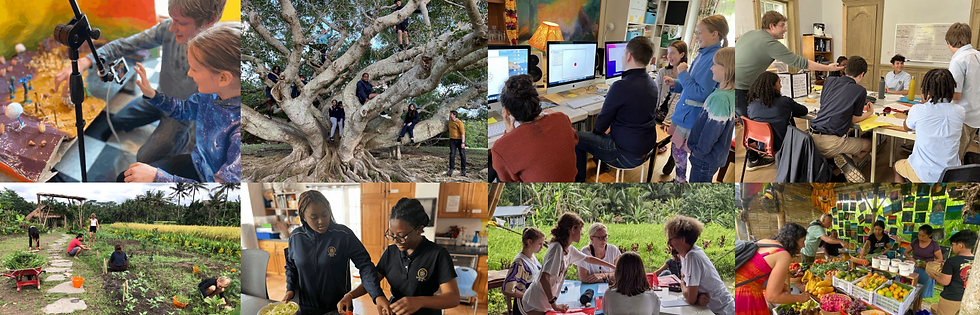
Biophilic Education holistic model for the future of educationBiophilia is the love of lifeSustainable Ethical InclusiveThe The Biophilic Education Alliance (BE All) are building an education system where a polymath like Leonardo Da Vinci could flourish. By delivering the standard curriculum through holistic, real-world projects, we are liberating learners' curiosity about the universe we live in and empowering the entrepreneurs and world-builders of the future. We are supporting schools and teachers to help them provide future thinking, skills-based experiential learning with our bespoke training and teaching resources. The Da Vinci Life-Skills (DVLS) Curriculum and the Da Vinci Qualification (DVQ) Assessment Framework provide a full transdisciplinary, skills-based secondary-level education system, with all the accompanying training and resources. Our five project pathways cover the learning objectives from the UK National Curriculum, students' interests, and 21st-century life skills, enabling students to also still sit the current standard UK exams if and when they choose. Our BE Foundation is providing research opportunities to impact ethical & sustainable education policy for all learners.
Kutumb is dedicated to promoting the total development of the individual by way of building language skills, bridging developmental gaps, and addressing issues of identity; this process of exposure is accomplished through theatre and football, among other creative methods.
VISION AND MISSION
VISION
The Kutumb Foundation envisions total community transformation, one young person at a time, through the total development of the individual, via the active creation of creative spaces for exposure through arts-led education. We see a gender-sensitive world, with harmonious communities, empowered to face the future head-on. We envision a world in which the non-profit sector works together with other social sector organisations, as well as the private sector, to foster positive change.
MISSION
The Kutumb Foundation is a twenty-year-old NGO working for the empowerment of disadvantaged young people across Delhi NCR. We are an arts-led education organisation, dedicated to promoting the total development of the individual by way of building language skills, bridging developmental gaps, and addressing issues of identity; this is accomplished through the creation of creative spaces using the overarching lens of drama. Drama conventions anchor our work in the space of free libraries, storytelling, literacy programming, capacity-building workshops, cultural programming, and sports for development football programming.


How teachers can promote a love of reading in their schools | Hannah Spelman | https://www.madeleinelindley.com/ |17 Aug17AugTeachers play a critical role in nurturing a passion for reading among children. This task can be challenging but is also profoundly rewarding. It boosts academic performance, enriches personal growth, and lays the groundwork for a lifelong bond with books. Various elements add complexity to this mission, such as catering to diverse student interests, accommodating varying reading levels, creating emotional resonance, and integrating literature across various subjects. Here, Madeleine Lindley Ltd provides an in-depth guide that addresses these important factors, Constructing a diverse library The foundation of fostering a love for reading is a comprehensive, diverse library. Offering a kaleidoscopic array of genres and topics caters to different children’s interests, encouraging exploration and discovery. It's essential to include fiction and non-fiction, poetry, graphic novels, and various forms of narrative to captivate all readers. A teacher must also represent diverse cultures, genders, abilities, and experiences in the books they choose, promoting inclusivity and broadening their children’s perspectives. Accessibility and readabilityEvery child deserves the joy of immersing themselves in a good book. Catering to different levels of reading ability by providing a gradient of complexity ensures both budding and advanced readers find appropriate and engaging material. Consideration for children with specific needs is crucial too. Enlarged text, audiobooks, or tactile books can help students with accessibility needs to embrace the reading culture and ensure every child feels included engagement and resonance books serve as mirrors and windows into feelings, serving as a tool for emotional exploration and understanding. Incorporating literature that spans a myriad of emotional themes enables students to understand their feelings and empathize with others. Age-appropriate books exploring joy, sadness, friendship, conflict, and beyond can also stimulate meaningful conversations and nurture emotional intelligence. Integrating literature across the curriculumReading should not be confined within the bounds of language studies but woven into all subjects, reinforcing its relevance and utility. This can be achieved by introducing subject-related books in science, history, or maths. When you do so, students can appreciate the practical application of reading, bolstering their engagement. Developing a reading cultureBuilding a rich reading culture requires effort beyond the library. Teachers can model their passion for reading by sharing their favorite books, engaging students in lively book talks, and dedicating time for quiet reading. Collaborations with local libraries, children’s book suppliers, exciting author visits, and thrilling reading challenges can make reading a shared community experience rather than an isolated task. Professional development for teachers are the light guiding students toward finding a love for reading and staying updated with effective literacy promotion strategies is essential. Regular professional development via workshops or seminars focused on reading instruction can empower teachers with innovative, engaging techniques to kindle enthusiasm for reading. Parental involvementFamilies also play a key role in nourishing a passion for reading. Teachers can help promote the value of reading in this home environment by recommending engrossing books for home reading, organizing delightful family literacy nights, or leveraging digital platforms for parents and children to share their reading adventures. This helps extend the culture of reading to the home, reinforcing its importance evaluation and adaptationLastly, continual evaluation and adaptation of reading promotion strategies keep the flame of reading passion burning brightly. Teachers can use student feedback, peruse reading logs, or consider book discussion outcomes to gauge the effectiveness of their strategies and make the necessary course corrections. Sparking a love for reading is a multi-dimensional effort involving the thoughtful selection of books, accessibility considerations, emotional engagement, curriculum integration, the creation of a vibrant reading culture, professional development, parental involvement and regular evaluation.